Greek Salad
Introduction
Imagine yourself sitting in a quaint Greek taverna overlooking the azure waters of the Mediterranean, a gentle breeze carrying the tantalizing aroma of olives, feta cheese, and fresh vegetables. In this idyllic setting, one dish stands out as a true representation of the vibrant flavors and simplicity of Greek cuisine – the Greek Salad.
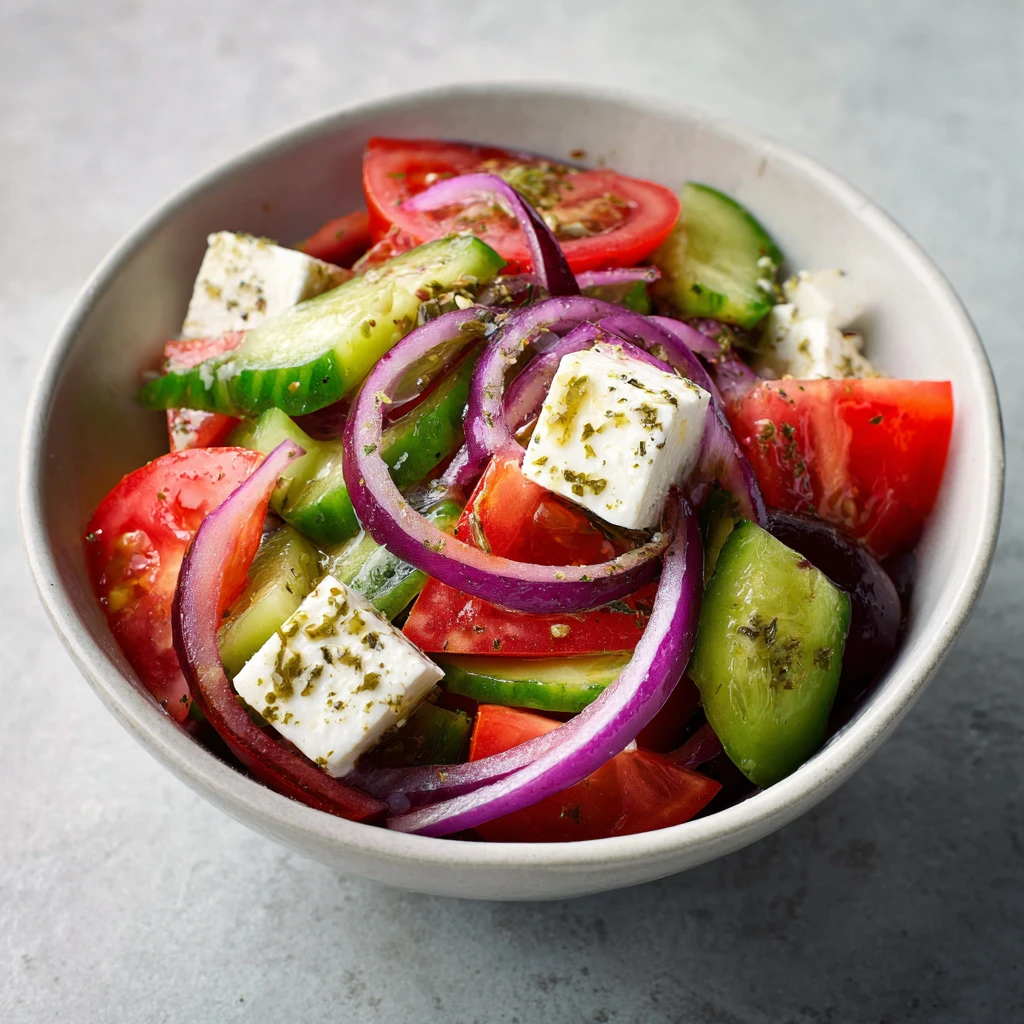
With its colorful array of crisp cucumbers, juicy tomatoes, tangy olives, creamy feta cheese, and zesty red onions, the Greek Salad is a culinary masterpiece that embodies the essence of freshness and balance. This iconic salad has captured the hearts and palates of food lovers around the world, thanks to its harmonious blend of flavors and textures.
The Greek Salad, also known as “Horiatiki” in Greece, holds a special place in the country’s culinary heritage. It is a dish deeply rooted in tradition and history, reflecting the Mediterranean diet’s emphasis on fresh, seasonal produce and simple yet flavorful ingredients.
Whether enjoyed as a light lunch, a refreshing side dish, or a vibrant starter, the Greek Salad never fails to delight with its combination of wholesome ingredients and bold flavors. In this article, we will explore the art of crafting the perfect Greek Salad and unravel the secrets behind this beloved dish.
Why You’ll Love This Recipe
What sets the Greek Salad apart is its unparalleled freshness and simplicity. This recipe celebrates the beauty of using high-quality, seasonal ingredients that shine on their own without the need for elaborate cooking techniques.
Additionally, the Greek Salad is incredibly versatile and customizable. You can adjust the ingredient quantities to suit your taste preferences, making it a perfect dish for both casual gatherings and formal events.
From a nutritional standpoint, the Greek Salad is a powerhouse of vitamins, minerals, and antioxidants. The combination of fresh vegetables, olives, and olive oil not only provides a burst of flavor but also offers numerous health benefits, making it a guilt-free indulgence.
Whether you are a seasoned cook or a novice in the kitchen, this recipe is foolproof and guarantees a satisfying outcome every time. Its simplicity and vibrant flavors make it a go-to option for busy weeknights or lazy weekend brunches.
Ingredients
To create the perfect Greek Salad, you will need the following ingredients:
– Ripe tomatoes
– Crisp cucumbers
– Red onions
– Kalamata olives
– Feta cheese
– Extra virgin olive oil
– Red wine vinegar
– Fresh oregano
– Salt and pepper to taste
Optional ingredient substitutions:
– Substitute black olives for Kalamata olives
– Use cherry tomatoes for a sweeter flavor
– Try goat cheese instead of feta for a tangy twist
Step-by-Step Instructions
1. Start by washing and chopping the tomatoes, cucumbers, and red onions into bite-sized pieces.
2. Pit the Kalamata olives and slice them in half. Crumble the feta cheese into small chunks.
3. In a large mixing bowl, combine the chopped vegetables, olives, and feta cheese.
4. Drizzle extra virgin olive oil and red wine vinegar over the salad. Season with salt, pepper, and fresh oregano.
5. Gently toss the ingredients to ensure even coating of the dressing.
6. Let the salad sit for a few minutes to allow the flavors to meld together.
7. Serve the Greek Salad in individual bowls or a large platter, garnished with additional oregano leaves and a drizzle of olive oil.
Expert Tips for Success
To enhance the flavors of the Greek Salad, consider marinating the vegetables in the dressing for a few hours before serving. This allows the ingredients to absorb the flavors and develop a more intense taste profile.
Avoid overdressing the salad, as this can make it soggy. Start with a modest amount of dressing and adjust according to your preference.
For a creamier texture, you can mix a spoonful of Greek yogurt into the dressing before tossing it with the vegetables.
Experiment with different herbs and spices to customize the flavor profile of the salad. Fresh mint, basil, or dill can add a refreshing twist to the classic recipe.
Variations and Substitutions
If you are looking to add more protein to the salad, consider incorporating grilled chicken, shrimp, or tofu. These additions not only boost the satiety factor but also introduce new textures and flavors to the dish.
For a vegan version of the Greek Salad, omit the feta cheese and substitute it with marinated tofu or a dairy-free cheese alternative. You can also sprinkle nutritional yeast on top for a cheesy flavor.
To make the salad more substantial, add cooked quinoa, bulgur, or chickpeas. These grains and legumes provide a hearty base and make the salad a complete meal on its own.
Serving Suggestions
The Greek Salad is best enjoyed fresh and at room temperature to appreciate the vibrant flavors of the ingredients. Serve it as a light appetizer before a Mediterranean-inspired meal or as a side dish alongside grilled meats, seafood, or falafel.
Pair the Greek Salad with a glass of chilled white wine or a refreshing homemade lemonade for a delightful dining experience. The crisp acidity of the wine complements the salad’s tangy notes, creating a harmonious marriage of flavors.
FAQs
Q: Can I make the Greek Salad in advance?
A: While the salad is best when freshly prepared, you can chop the vegetables ahead of time and assemble them just before serving to maintain the crunchiness and freshness.
Q: How long will the Greek Salad stay fresh in the refrigerator?
A: The salad can be refrigerated for up to 2 days, but it is recommended to consume it on the same day for the best taste and texture.
Q: Can I add avocado to the Greek Salad?
A: Avocado can be a delicious addition to the salad, adding creaminess and a buttery texture. Make sure to add the avocado just before serving to prevent browning.
Final Thoughts
The Greek Salad is more than just a dish – it is a celebration of the Mediterranean lifestyle, where simplicity, freshness, and vibrant flavors reign supreme. With its colorful medley of ingredients and bold taste profile, this salad has the power to transport you to sun-drenched Greek islands with each bite.
Whether you are hosting a summer barbecue, craving a light and healthy meal, or simply looking for a taste of Greece in your own kitchen, the Greek Salad is a timeless classic that never disappoints. So, gather your ingredients, embrace the Mediterranean spirit, and savor every forkful of this culinary masterpiece.
Greek Salad
A vibrant and refreshing salad showcasing the flavors of the Mediterranean with ripe tomatoes, crisp cucumbers, tangy olives, creamy feta cheese, and zesty red onions, all dressed in a simple combination of extra virgin olive oil, red wine vinegar, and fresh oregano.
Ingredients
- 4 ripe tomatoes
- 2 crisp cucumbers
- 1 red onion
- 1 cup Kalamata olives
- 1 cup crumbled feta cheese
- 1/4 cup extra virgin olive oil
- 2 tablespoons red wine vinegar
- 1 tablespoon fresh oregano
- Salt and pepper to taste
Directions
-
Start by washing and chopping the tomatoes, cucumbers, and red onions into bite-sized pieces.
-
Pit the Kalamata olives and slice them in half. Crumble the feta cheese into small chunks.
-
In a large mixing bowl, combine the chopped vegetables, olives, and feta cheese.
-
Drizzle extra virgin olive oil and red wine vinegar over the salad. Season with salt, pepper, and fresh oregano.
-
Gently toss the ingredients to ensure even coating of the dressing.
-
Let the salad sit for a few minutes to allow the flavors to meld together.
-
Serve the Greek Salad in individual bowls or a large platter, garnished with additional oregano leaves and a drizzle of olive oil.